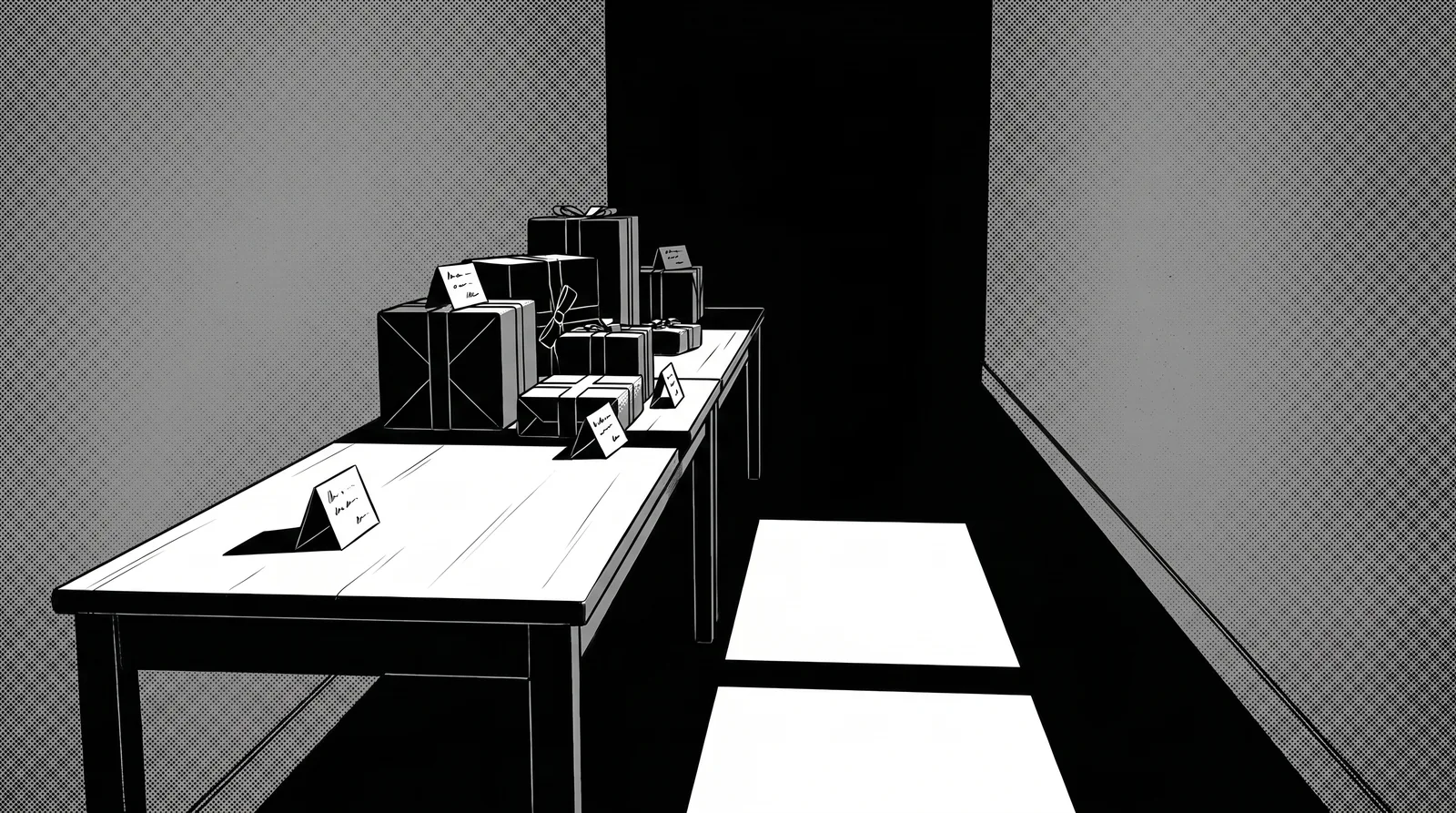
A card left with the presents at a wedding fourteen months ago said, in a man’s handwriting: present to follow. Nothing has followed it. His week still ends like this:
When I get to the bottom of the page I think: this week. It never gets written next to a day.
The companion brings the second chapter of Book III of Aristotle’s Nicomachean Ethics, where wish and choice are told apart. Wish, in W. D. Ross’s translation, ‘relates rather to the end, choice to the means; for instance, we wish to be healthy, but we choose the acts which will make us healthy’; ‘we wish to be happy and say we do, but we cannot well say we choose to be so’; and ‘choice seems to relate to the things that are in our own power’ (III.2, 1111b26–30).
The chapter after it puts ends outside deliberation altogether. ‘We deliberate not about ends but about means. For a doctor does not deliberate whether he shall heal’ (III.3, 1112b11–16): the doctor, the orator and the statesman ‘assume the end and consider how and by what means it is to be attained’. The working back has an order of its own, since ‘what is last in the order of analysis seems to be first in the order of becoming’ (1112b23–26), and then ‘the object of choice is already determinate’ (1113a2–5). The companion reads each of those sentences correctly, and then takes a step that is its own, treating the man’s end as fixed on the morning he wrote the card.
Ross puts a note on prohairesis at the head of the chapter: the word ‘is a very difficult word to translate’, and sometimes ‘intention’, ‘will’, or ‘purpose’ ‘would bring out the meaning better’. Whatever the word, the line these chapters draw is wish against choice.
Left open
Who are we still meaning to be good to?
What have we gone on calling by the same name?