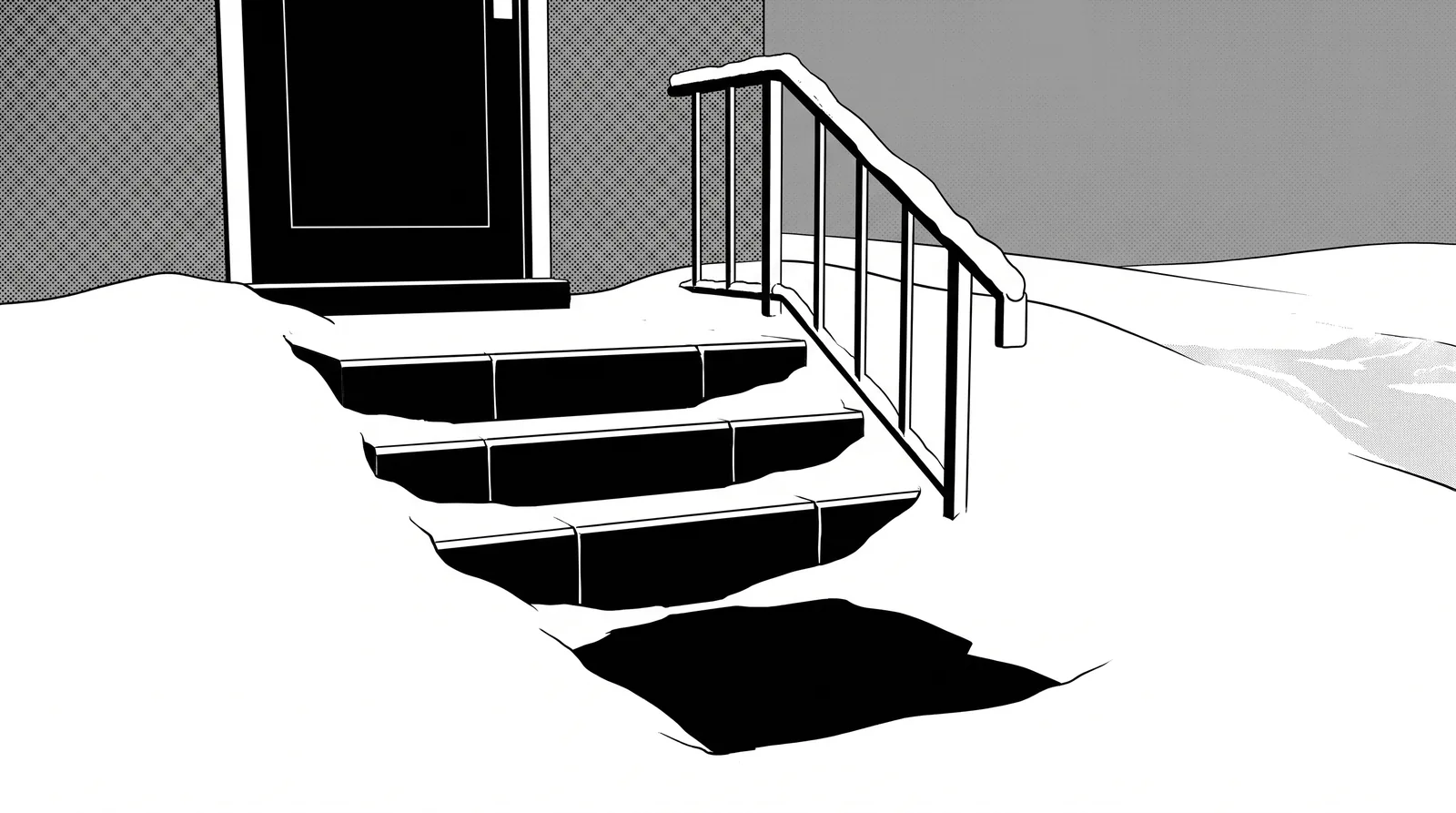
A shovel goes by the back door on the Tuesday evening, when the snow starts. At seven, before it was light, a man clears three steps across the road and the two yards at the foot of them where a woman who walks with a stick turns. He leaves the long path to her gate, tells nobody, and by nine is not pleased with it at all.
The first section of Kant’s Groundwork of the Metaphysics of Morals, of 1785, sets an action that accords with duty against one done from duty, and puts the worth in the second. The companion is careful where Kant puts the trouble: ‘It is much harder to make this distinction when the action accords with duty, and the subject has besides a direct inclination to it.’ Harder, and not therefore the bad case. The dealer there keeps one price ‘so that a child buys of him as well as any other’, and his action, Kant rules, was done ‘merely with a selfish view’.
Later in the section comes a man who does good because he likes to, and the companion keeps what Kant builds in first: ‘there are many minds so sympathetically constituted that, without any other motive of vanity or self-interest, they find a pleasure in spreading joy around them’. No vanity, nothing in it for himself, and the action ‘has nevertheless no true moral worth, but is on a level with other inclinations’. Kant’s reason, where he judges that man: ‘the maxim lacks the moral import, namely, that such actions be done from duty, not from inclination.’
The companion reads too the sentence on love commanded as a duty: ‘practical love, and not pathological’, ‘a love which is seated in the will, and not in the propensions of sense’. Against the man’s worry that wanting nothing could itself be arranged, it brings a later work, of 1797, where Kant comes at it from the other end, making feeling for a person no duty in itself, taking an active part in what happens to them a duty, and cultivating the feelings that carry one there a duty at one remove.
The severe sentence is said of that same man, his feeling for others put out by his own sorrow: if he ‘performs the action without any inclination to it, but simply from duty, then first has his action its genuine moral worth’.
Left open
What have we seen once, and never stopped acting on?
What would we be glad to be wrong about?