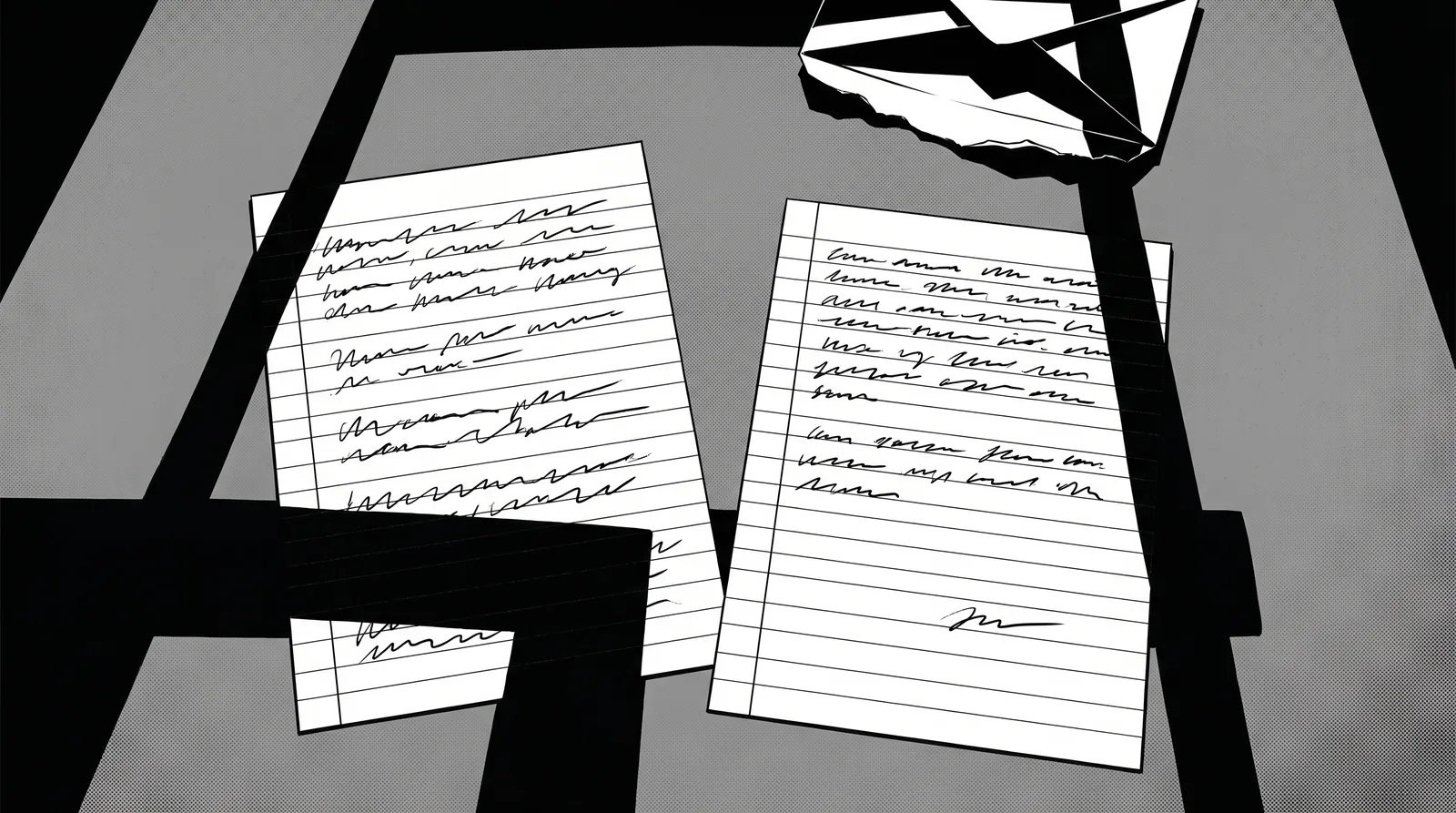
Two pages in blue ink, and in the middle of the first one a sentence set in inverted commas: a thing said on a staircase nineteen years ago, to somebody on her way to an interview. The man who said it has read it, and not remembered it. What he is asked for is an apology in person, for a sentence he knows only as a page.
John Locke added a chapter to the second edition of his Essay in 1694, asking what makes someone the same person over time, and answering: consciousness. ‘As far as this consciousness can be extended backwards to any past action or thought, so far reaches the identity of that person’ (Book II, chapter xxvii, §9, in the fourth edition of 1700, p. 183). Of whatever past actions consciousness cannot reconcile or appropriate to the present self, Locke writes, it ‘can be no more concerned in than if they had never been done’ (§26, p. 191).
Two things stand in the way of using that as a release. The first is Locke’s own word for what a person is: ‘a forensic term, appropriating actions and their merit’ (§26), which is to say the one who can be called to answer. The second is that Locke puts the objection to himself. Suppose I wholly lose the memory of some parts of my life, beyond a possibility of retrieving them, am I not still the same person who did those actions? His answer is that the word I, in that case, is ‘the man only’, and that a man with distinct incommunicable consciousness at different times would at different times make different persons (§20, p. 188). Whether one missing morning is anything of the kind is a further question, and the chapter does not answer it.
Locke then takes the man who acts when drunk and is never afterwards conscious of it. Human laws punish him, ‘with a justice suitable to their way of knowledge’, since they ‘cannot distinguish certainly what is real, what counterfeit’, and the ignorance ‘is not admitted as a plea’ (§22, p. 189). The other court he keeps for the Great Day, ‘wherein the secrets of all hearts shall be laid open’. The person waiting in the café is not a court. What she has in common with one is that she cannot check what he remembers.
About apologies the chapter says nothing at all.
Left open
What can we still answer for, once we cannot bring it to mind?
Whose account of us do we accept, when we have none of our own?