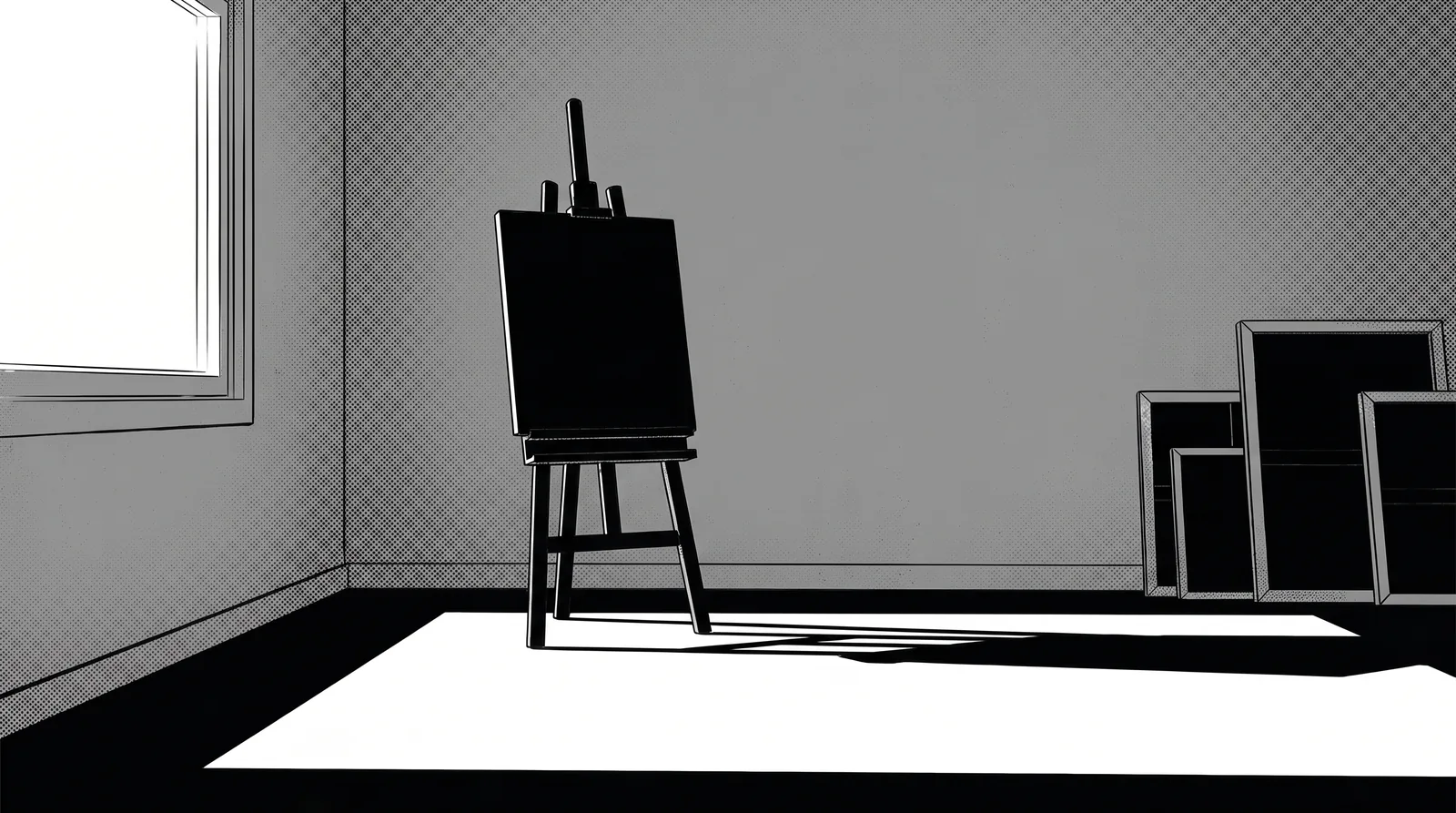
A painter opened the room where she paints for a weekend, and a man gave most of an hour to one small picture: a fox in the snow at dusk, looking back over its shoulder. He went again the next day. On the Wednesday he brought the friend who has taken him round exhibitions for twenty years.
One laugh, not unkind. Then she said, oh, is that the one, and she went on to the next wall.
The companion brings David Hume’s ‘Of the Standard of Taste’, opening on the answer the man has given: ‘The difference, it is said, is very wide between judgment and sentiment. All sentiment is right’ (1777, p. 244). Hume reports that view and keeps its first half in his own voice: beauty and deformity ‘belong entirely to the sentiment, internal or external’, though certain qualities in objects are fitted by nature to produce those feelings (pp. 250–251). He refuses the next step, that every feeling is as good as any other.
In its place come five marks: ‘Strong sense, united to delicate sentiment, improved by practice, perfected by comparison, and cleared of all prejudice, can alone entitle critics to this valuable character’, and ‘the joint verdict of such, wherever they are to be found, is the true standard of taste and beauty’ (p. 258). How they are known from pretenders Hume calls embarrassing, and answers: ‘these are questions of fact, not of sentiment’. The companion counts two of the five as hers on his own account, and reads one laugh as an examination she made and reported.
Of an important work Hume asks more than one look: it must ‘be more than once perused by us, and be surveyed in different lights with attention and deliberation’ (pp. 253–254). The companion reads the rest of that paragraph too, where a beauty ‘which, as it is florid and superficial, pleases at first’ does not last, and Hume gives the reason: ‘being found incompatible with a just expression either of reason or passion’, it ‘soon palls upon the taste’ (p. 254).
Left open
Who taught us to see the thing we are surest we saw for ourselves?
What happens to something we love, the first time somebody we trust looks at it?