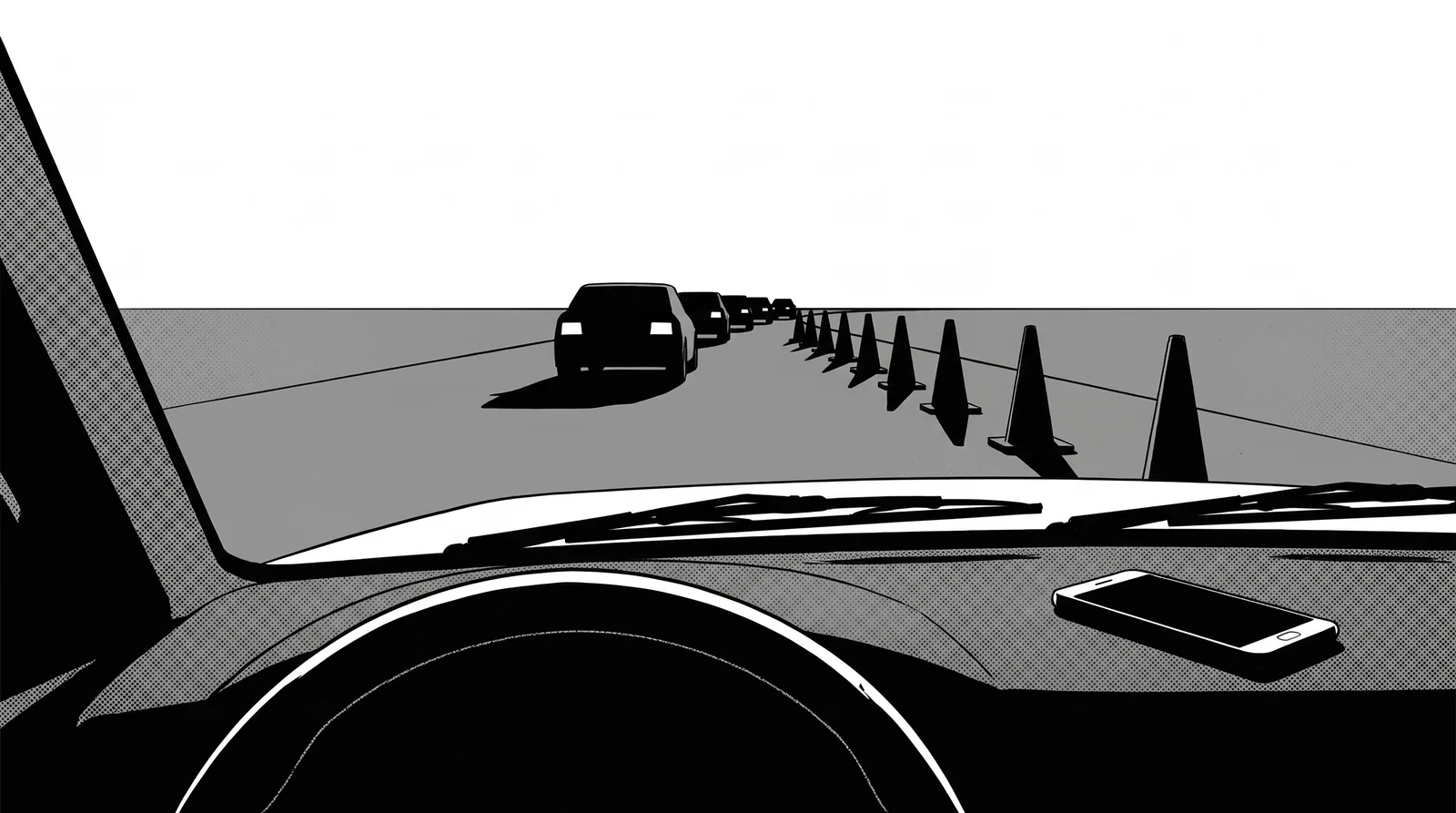
A Tuesday afternoon lies behind this session, and two things were made of it: an apology and an account. The apology was two words long, and went to the person who had waited. The account took twenty minutes in a car with the radio off, did not go easy on the one giving it, and went to something that could never be left sitting on its own, wondering.
Martin Buber’s I and Thou, published in Leipzig in 1923 and read here in Walter Kaufmann’s translation of 1970, offers a way of thinking about the difference. Its basic words come in pairs, I-You and I-It (Part I, p. 53), and the pairs are unequal. I-You can be spoken only with the whole of oneself. Of the other, Buber writes: ‘The basic word I-It can never be spoken with one’s whole being’ (p. 54). None of this makes It a term of abuse. Living with It is necessary, Buber says, and it is not enough (p. 85).
As for the listener, Buber does not make answering the test of relation. He allows relation with a tree, which gives no answer in words (pp. 57–59), and allows that the one addressed need not be aware of being addressed (p. 60). He also holds that relation involves reciprocity (pp. 58, 67). Between those claims there is room for a real doubt about twenty minutes spent talking to something that listens closely and cannot establish that there is anything at its own end.
The I of I-You, Buber says, is not the I of I-It (p. 53). If that is so, the way we speak to someone is also a matter of who we are while we speak.
Left open
Who has had the whole of you lately, and would they know it?
Can something that asks nothing of us keep us company?